
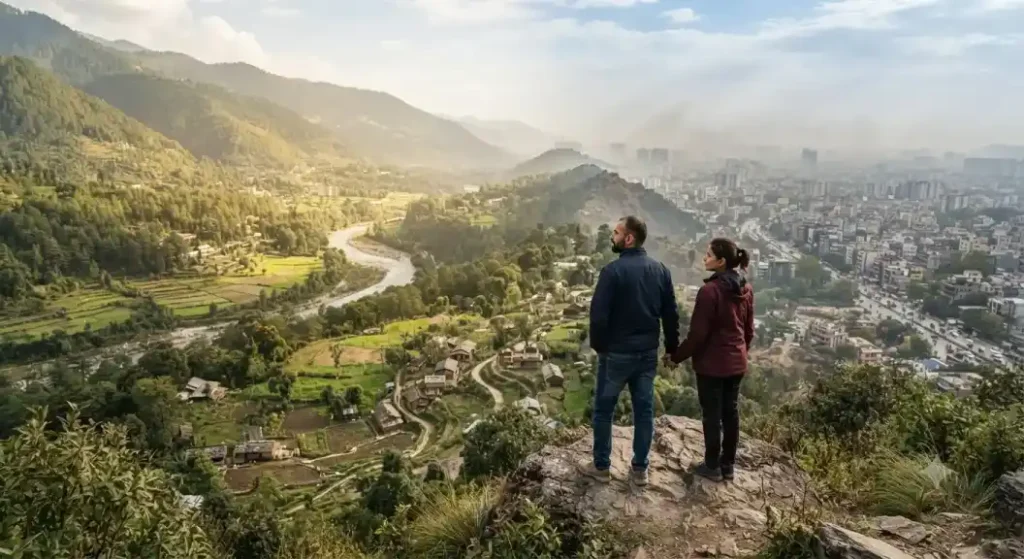
For generations, people dreamed of moving to the city. Cities offered better jobs, education, entertainment and opportunities.
Today, many people are dreaming about the opposite.
After years of traffic, noise, pollution, crowded spaces and stressful work schedules, they want to leave the city and move to a quiet village, small town or mountain area.
The idea sounds peaceful. But is it really a better life?
Why Do People Want to Leave the City?
Modern city life can be exhausting. Long commutes, rising expenses, work pressure and constant phone notifications can make people feel that life has become a never-ending race.
Many people simply want more time, fresh air, open spaces and a slower routine.
For someone who has spent years surrounded by concrete buildings and traffic, waking up to trees and mountains can sound like the perfect alternative.
But there is an important difference between visiting a place and living there permanently.
The Reality of Village and Mountain Life
A holiday in the mountains is very different from everyday life there.
You may love the beautiful views, peaceful mornings and fresh air, but permanent living brings practical questions.
Where is the nearest hospital? How reliable is the internet? How far is the nearest market? What happens during bad weather? How will you travel if you don’t own a vehicle?
These things don’t mean village or mountain life is bad. They simply mean that the decision needs planning.
The Biggest Question: How Will You Earn?
This is probably the most important question to answer before leaving the city.
Peace is wonderful, but you still need a regular income.
Fortunately, technology has created several possibilities.
Remote work: People working in IT, accounting, customer support, digital marketing, sales and other fields may be able to work from anywhere with reliable internet.
Freelancing: Writing, graphic design, web development, video editing, consulting and other skills can be offered to clients from anywhere.
Online teaching: Teachers and professionals can teach languages, school subjects, music, technology or other skills online.
Tourism and homestays: In suitable locations, people may earn through homestays, local tours, trekking experiences, transportation or other tourism services.
Local products: Depending on the region, farming, handicrafts, homemade food products, fruits, vegetables and other local products can become sources of income.
Some people may even combine two or three income sources, such as remote work with a small homestay or online teaching.
The important thing is to have a realistic income plan before moving.
Is It Really Cheaper?
Village life can be less expensive in some ways, but don’t assume it will automatically be cheap.
You still need to consider housing, food, internet, transportation, healthcare, vehicle expenses and trips to the nearest city.
A lower house rent doesn’t necessarily mean a lower total cost of living.
Calculate your expected monthly expenses before making the move.
What About Social Life and Healthcare?
Cities offer restaurants, cinemas, professional networks, shopping and a large variety of social activities.
A remote village may offer much less.
For some people, that is exactly what they want. For others, it can eventually feel isolating.
Healthcare is another important consideration, particularly for families and older people. Before moving, find out how far the nearest hospital, doctor and pharmacy are.
You Don’t Have to Leave the City Forever
There is also a middle path.
Instead of permanently moving away, you could spend a few weeks or months each year in a village or mountain town.
Another option is moving to a smaller town that is still reasonably close to a major city.
This can provide some of the peace and space of rural life without completely giving up city conveniences.
Try Before You Move
If you are seriously considering this lifestyle, don’t make the decision based on a holiday.
Rent a place for a month or two and live there like a local.
Work from there. Buy groceries. Cook your own food. Check the internet. Visit the local market. Find the nearest hospital. Talk to local residents.
Most importantly, experience ordinary weekdays.
The real question is not whether you enjoy a beautiful morning in the mountains. It is whether you would still enjoy living there on a rainy Wednesday when you have work to finish and several everyday problems to deal with.
So, Is Village or Mountain Life Better?
There is no universal answer.
For some people, city life provides the career opportunities, healthcare, social life and convenience they need.
For others, peace, nature, space and a slower lifestyle may be more valuable.
Perhaps the better question is not “Is village life better than city life?”
It is:
“What kind of life do I actually want, and can I realistically support it?”
Before leaving the city, think beyond the beautiful scenery. Think about your income, healthcare, family, social life and everyday responsibilities.
Because a beautiful place can make a wonderful holiday.
But the right place to live is the one where your work, income, relationships and lifestyle can all fit comfortably together.