
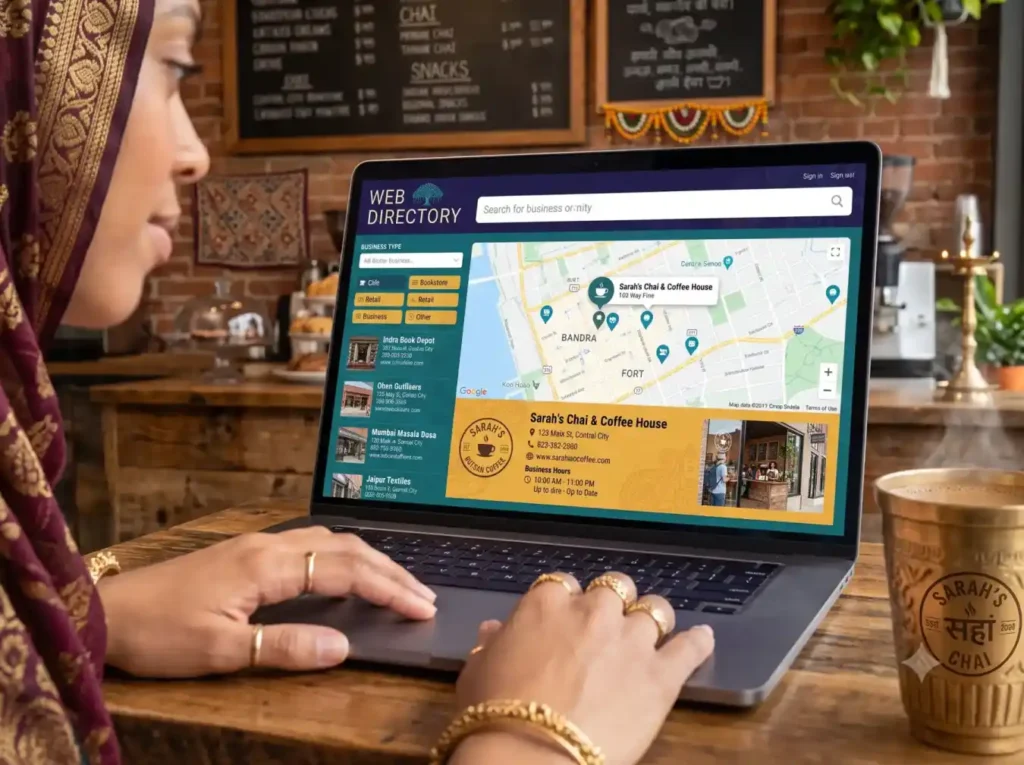
In today’s digital world, having a website is an important step for any business, but simply owning a website does not guarantee that potential customers will find it. People search for products, services and local businesses across search engines, business directories, maps and other online platforms. This is where web directories can play a useful role.
Adding your business details to relevant web directories can help people discover your company, learn about your services, find your contact information and visit your website. When managed properly, business listings can also support your local SEO strategy and strengthen your online presence.
In this article, we will explore the benefits of adding your business to web directories and explain how to make the most of your listings.
1. Improve Your Online Visibility
One of the main benefits of business directories is increased online visibility. When you list your business on relevant directories, you create additional places where potential customers can discover your company.
For example, imagine you own a photography studio in Mumbai. Someone searching for a photography studio may discover your business through a local directory, even if they have never visited your website before.
Your business can appear in different online environments, including:
- Local business directories
- Industry-specific directories
- Professional service directories
- Regional business listing websites
- Relevant niche directories
The more relevant places your business appears, the more opportunities people have to find it. However, quality and relevance matter more than simply having a large number of listings.
2. Support Your Local SEO Strategy
Local SEO helps businesses become more visible to people searching for products or services in a particular geographical area.
Business directories can contribute to local SEO by providing consistent information about your company, including its name, address, phone number, website and business category.
For example, if you operate a digital marketing agency in Mumbai, your directory listings should clearly communicate your business name, location and services.
Consistent business information helps customers identify your company and can support search engines in understanding your business details.
For better results, make sure your business name, address and phone number are accurate and consistent across your important listings. Avoid creating unnecessary variations of your business name or location.
3. Build Customer Trust and Credibility
Customers often want to learn more about a business before contacting it. They may look for its website, location, services, photographs, reviews and contact information.
A complete business directory profile can help answer these questions and make your business easier to evaluate.
Consider including:
- Your official business name
- A clear description of your services
- Your website URL
- Contact details
- Business hours
- Service locations
- Relevant photographs
- Genuine customer reviews, where supported
A detailed and up-to-date listing gives potential customers useful information and makes it easier for them to take the next step.
Remember that directory listings do not automatically establish trust. Accuracy, transparency and a good customer experience are what make your business credible.
4. Get More Relevant Website Visitors
Business directories can become another source of traffic for your website.
When someone finds your listing and wants more information, they may click through to your website to explore your products, services, portfolio or pricing.
For instance, a person looking for a wedding photographer might discover your studio in a photography directory and then visit your website to see your portfolio.
This is particularly useful when your directory listing reaches people who are already interested in the services you provide.
To make these visits more valuable, link to a relevant page on your website rather than automatically sending every visitor to your homepage. A photography studio, for example, might link to its wedding photography portfolio.
5. Create Opportunities for Backlinks
Some web directories allow businesses to include a link to their official websites. These links are commonly called backlinks.
Backlinks can help search engines discover pages and understand connections between websites. Depending on the directory and the link attributes, they may also contribute to your site’s link profile.
However, not all directory backlinks carry the same value. A relevant, reputable directory can be useful as a source of referral traffic and business information, while low-quality directories created mainly to sell links may offer little benefit.
When choosing directories, consider:
- Whether the directory is relevant to your industry
- Whether real customers use the platform
- Whether the business profiles are useful and maintained
- Whether the directory has clear editorial standards
- Whether the listing provides a genuine opportunity for discovery
Avoid submitting your website indiscriminately to hundreds of unrelated directories just to collect backlinks.
6. Help Customers Find Your Contact Details
One practical advantage of business directories is that they can make essential information easier to access.
Customers may want to call your business, visit your office, check your opening hours or understand which services you offer.
If your directory profile includes accurate contact information, customers can find these details without searching through multiple pages of your website.
For businesses that depend on phone enquiries, appointments or local visits, this convenience can be particularly valuable.
Check your listings regularly to ensure that old telephone numbers, outdated addresses and incorrect business hours are not causing confusion.
7. Reach Customers Through Industry-Specific Directories
Not every directory serves the same audience. Some are general business directories, while others focus on a particular industry, profession or service.
Industry-specific directories can be useful because visitors may already be looking for the type of business you operate.
Examples include:
- Photography directories for photographers and studios
- Education directories for schools and training institutes
- Healthcare directories for eligible healthcare providers
- Hospitality directories for hotels and restaurants
- Professional directories for consultants and agencies
A filmmaking academy, for example, may find relevant opportunities in education, training and creative-industry directories.
Choose platforms that genuinely match your business and the customers you want to reach.
8. Make Your Business Easier to Discover in AI Search
People are increasingly using AI-powered tools to research companies, compare services and find answers to questions.
Accurate and consistent business information across your website and reputable online platforms can help establish a clearer digital presence.
For example, a business profile that explains what your company does, where it operates and how customers can contact you provides useful information about your business.
However, being listed in a web directory does not guarantee that an AI system will mention or recommend your business. AI search visibility depends on many factors, including the information available, its reliability, relevance and the way the system retrieves and presents sources.
For businesses interested in AI visibility, directory listings should be one part of a broader strategy that also includes:
- A detailed and informative official website
- Clear service and location pages
- Accurate business information
- Useful articles answering customer questions
- Genuine reviews and public business references
- Consistent descriptions of products and services
The objective is to make your business information clear, accessible and useful wherever potential customers research companies.
9. Increase Brand Awareness
Every relevant business listing is another opportunity for people to encounter your brand.
Even when someone does not immediately visit your website or contact you, seeing your business name in a relevant context may help them become familiar with your company.
A consistent business description, recognizable logo and accurate website link can help create a coherent identity across different platforms.
For example, a company that offers website development, SEO and digital marketing should describe those services consistently rather than presenting a completely different business identity on every directory.
Brand awareness develops over time, so it is important to focus on relevant exposure rather than simply counting the number of listings.
10. Reach Customers Beyond Your Existing Audience
Your website may already attract visitors through search engines, social media or advertising. Business directories provide another possible discovery channel.
This can be particularly helpful for newer businesses that are still building their audience and online reputation.
A local service provider may find customers through a regional directory, while a specialist company may receive enquiries from an industry-focused platform.
Different directories attract different audiences, so it is worth identifying which platforms actually generate useful enquiries instead of assuming that every listing will produce traffic.
Track referral visits, calls, enquiry forms and other meaningful actions wherever possible.
11. Provide Useful Business Information in One Place
Many directories allow businesses to add more than just a name and website address. They may offer fields for service descriptions, categories, photographs, locations, opening hours and other details.
Using these fields properly can help potential customers understand your business before they contact you.
For example, a digital marketing agency could describe its SEO, website design, content marketing and social media services. A training institute could explain its courses, learning format, duration and contact details.
Write descriptions for real people, using clear language and accurate information. Avoid stuffing profiles with repetitive keywords or making claims that you cannot substantiate.
12. Support Your Overall Digital Marketing Strategy
Business directories are not a replacement for a website, content marketing, social media or paid advertising. They work best when they complement these activities.
A coordinated digital marketing strategy might include:
| Marketing activity | Main purpose |
|---|---|
| Official website | Present your business and convert visitors |
| Web directories | Create additional discovery opportunities |
| Local SEO | Improve relevance for local searches |
| Social media | Share updates and engage with audiences |
| Content marketing | Answer questions and demonstrate expertise |
| Customer reviews | Provide genuine customer feedback |
| Email marketing | Maintain communication with interested customers |
Each channel has a different role. Directory listings are most useful when they provide accurate information and connect interested people with the rest of your online presence.
How to Choose the Right Web Directories
Before submitting your business information, evaluate the directory carefully. A large number of listings is not necessarily a sign of a strong online presence.
Use this checklist when deciding whether a directory is worth your time.
Directory evaluation checklist
Tick each item as you evaluate a directory.The directory is relevant to my industry or location.The website appears legitimate and is maintained.The listing allows accurate business information.The directory has useful categories and descriptions.The platform provides a genuine discovery opportunity.The listing terms and any fees are clear.I can update or correct my information later.
0 of 7 checks completed
Common Mistakes to Avoid When Listing Your Business
While adding your business to directories can be useful, careless submissions may waste time or create inconsistent information.
1. Submitting to irrelevant directories
A directory should have a meaningful connection to your industry, location or audience. Unrelated listings may provide little value.
2. Using inconsistent business details
Different addresses, telephone numbers or business names can confuse customers. Keep important information accurate and consistent.
3. Writing keyword-stuffed descriptions
A business profile should explain what you do in natural language. Repeating the same keyword unnecessarily can make your listing difficult to read.
4. Ignoring existing listings
Your business may already have profiles created by customers, directory owners or other sources. Check for existing listings before creating duplicates.
5. Paying for listings without evaluating them
Some directories offer paid upgrades. Before spending money, understand what the upgrade provides and whether the audience is relevant to your business.
6. Forgetting to update your profiles
If your address, services, website or opening hours change, update your important directory listings as well.
How Many Web Directories Should You Submit Your Business To?
There is no fixed number of directories that every business needs.
A local business may benefit from a small set of reputable local and industry-specific platforms, while a business operating across multiple regions may need a broader listing strategy.
Start with directories that are genuinely relevant. Complete the profiles carefully, check that the information is accurate and monitor whether they generate meaningful visits or enquiries.
It is usually more useful to maintain a smaller number of accurate, relevant profiles than to create hundreds of low-quality listings that nobody uses.
Frequently Asked Questions
Are web directories still useful for SEO?
Yes, relevant and reputable web directories can still be useful for business discovery, referral traffic and maintaining consistent business information. Their SEO value varies, and directory links should not be treated as a guaranteed way to improve rankings.
Do web directories provide backlinks?
Some directories provide clickable links to business websites. The SEO impact depends on factors such as the directory’s quality, relevance and link attributes. A listing may still be useful even if its link does not pass ranking signals.
Are free business directories worth using?
Free directories can be useful if they attract a relevant audience and allow you to present accurate business information. Evaluate them on usefulness and credibility rather than price alone.
Can directory listings improve Google rankings?
Directory listings can support a broader local SEO strategy, but they do not guarantee higher Google rankings. Search visibility depends on multiple factors, including relevance, website quality, location and the competition for a search.
Do web directories help with AI search visibility?
Accurate information on reputable directories can contribute to your wider online presence. However, directory submissions alone cannot guarantee inclusion or recommendations in AI-generated answers.
Should I list my business in international directories?
International directories may be relevant if your business serves international customers or operates across multiple countries. If your business mainly serves a local audience, prioritize relevant local and industry-specific platforms.
What information should I include in a business directory listing?
Include your official business name, website, contact information, business category, location or service area, opening hours where applicable, and a clear description of your products or services. Add genuine photographs and other useful details when the directory supports them.
Conclusion
Adding your business details to relevant web directories can create more opportunities for customers to discover your company, visit your website and contact you. It can also support local SEO, provide useful business information across the web and contribute to your wider digital marketing efforts.
The key is to focus on quality, relevance and accuracy. Choose directories that serve your audience, complete your profiles carefully and keep your information updated.
Rather than treating directory submissions as a shortcut to better rankings, consider them a practical part of building a consistent and discoverable online presence.
A business that is easy to find, understand and contact gives potential customers a clearer path from discovery to enquiry.