
Simple Exercises to Speak Clearly and Naturally
You may have something interesting to say, but does your voice hold the listener’s attention?
Sometimes we rush through a sentence, leave words unfinished, or speak in the same tone for too long. We may not notice these habits until we hear a recording of ourselves.
Voice practice is a useful way to begin noticing them. Whether you make videos, tell stories, speak in meetings, or want to learn voiceover, start with a short passage and listen to how you deliver it.
A Good Voice Is More Than a Deep Voice
Many people think they need a deep, heavy voice to sound impressive. But think of someone you enjoy listening to. It may be their warmth, clear speech, or the way they tell a story that keeps you interested.
Your natural voice is a good place to start. Rather than forcing it to sound different, learn how to use it with more clarity and expression.
Why Voice Modulation Matters
Voice modulation is an important part of good speaking. It means varying your way of speaking, and volume to suit what you are saying.
You would not share happy news in the same way you would explain a serious problem. These changes often happen naturally in conversation. Yet when we read a script or face a camera, our voice can suddenly become flat or forced.
Try saying:
“अच्छा, तो तुम आज आ रहे हो।”
Say it as though you are happy. Then imagine you are surprised. The words are the same, but the listener hears a different meaning.
This is a small introduction to modulation. Learning to use it well takes more than adding random highs and lows. A well-experienced teacher can help you understand where a change is needed, how much expression to use, and when to keep your delivery simple.
Can Voice Exercises Improve Your Voice?
The right voice exercises can help your voice sound clearer, steadier, and more expressive. But the exercise needs to suit your voice, and you need to do it correctly.
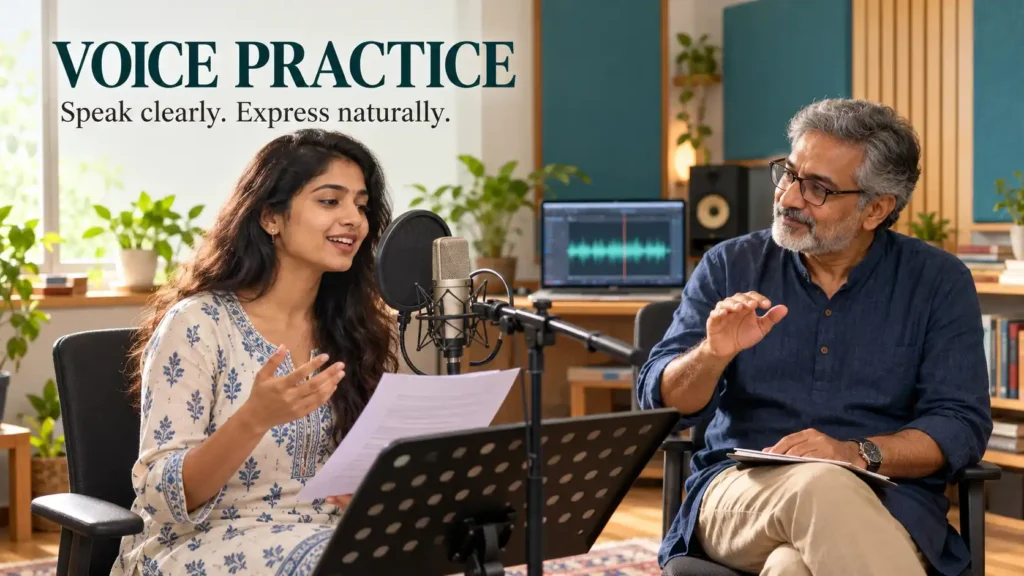
For this reason, voice exercises should be practised under a teacher’s guidance. An experienced teacher can listen to your voice, choose suitable exercises, and correct the way you practise.
Trying to force a deeper voice or copying demanding exercises without understanding them is not a useful shortcut. Keep your speaking comfortable, and stop if it feels strained.
A Few Simple Ways to Begin
Speak Naturally
Read a few lines as if you are talking to a friend. Do not try to sound like an announcer unless the script calls for it.
Understand Before You Read
Take a moment to understand the situation. Who is speaking, and to whom? A friendly invitation needs a different approach from a public announcement.
Avoid Rushing
Give the listener time to follow your words. A small pause at the end of a thought can make your speech easier to understand.
Record a Short Passage
Listen to two or three sentences rather than recording a long speech. Notice one thing you would like to improve, then try again.
Short Voice Practice Scripts in Hindustani Hindi
These short scripts give you a few different speaking situations to try. They are a starting point for reading practice, not a complete voice-training routine.
1. A Friendly Conversation
“अरे, आओ ना। मैं अभी चाय बना रहा था। तुम्हारे लिए भी बना दूँ? वैसे आज इतने चुप क्यों हो? चलो, पहले बैठो। आराम से बात करते हैं।”
Imagine that a friend has come to visit. Try to make it sound like something you would actually say.
2. A Story Opening
“उस सुबह स्टेशन पर बहुत भीड़ थी। मैं अपनी ट्रेन का इंतज़ार कर रहा था कि किसी ने पीछे से मेरा नाम लिया। मुड़कर देखा तो एक बुज़ुर्ग मुस्कुरा रहे थे। लेकिन मैं उन्हें पहचान नहीं पाया।”
Read this as if you are telling someone about an unusual experience. Would they want to hear what happened next?
3. A Simple Announcement
“कृपया ध्यान दें। आज शाम की कहानी सुनाने की बैठक छह बजे शुरू होगी। सभी लोगों से गुज़ारिश है कि दस मिनट पहले पहुँच जाएँ। बैठक पहली मंज़िल के बड़े हॉल में होगी। शुक्रिया।”
Make the time and location easy to understand. You should not need to shout to sound clear.
4. A Short Advertisement
“दिन भर की भागदौड़ के बाद, कुछ पल अपने लिए निकालिए। गरम चाय बनाइए, अपनी पसंद की किताब उठाइए और आराम से बैठ जाइए। आज की शाम, एक अच्छी कहानी के नाम।”
Keep it warm and inviting. Notice how your delivery changes from the announcement.
5. A Personal Memory
“आज अलमारी साफ़ करते हुए माँ की लिखी एक पुरानी चिट्ठी मिली। उसमें बस इतना लिखा था, वक़्त पर खाना खा लेना और अपना ख़याल रखना। मैं उसे पढ़कर मुस्कुरा दिया। फिर कुछ देर वहीं बैठा रहा।”
Tell it gently, as a memory you are sharing with someone close to you. There is no need to force the emotion.
What Do You Hear in Your Recording?
Perhaps the conversation sounds natural, but the advertisement feels exaggerated. Maybe you understand the emotion in the story but cannot quite express it.
That is a useful discovery. It gives you something specific to work on.
You could also put the script aside and explain the same idea in your own words. If that sounds more relaxed, try bringing some of that ease into your next reading.
Learn With the Right Guidance
Practising on your own can help you become more aware of your speech. A teacher can help you understand why something sounds awkward and how to improve it. This is especially useful when learning voice modulation and practising voice exercises.
For professional training, you can join Filmit Academy, which offers both an Online Voice Course and an Offline Voice Course in Mumbai.
Start with one short script. Listen to yourself with curiosity rather than criticism. You do not have to change everything at once, but you do need to know what you are working towards.